Sep 2025
Generative AI has transformed how we create text, images, and video—but a deeper shift is already underway.
AI is moving beyond the screen and into the real world, evolving from a system that responds to one that can act. This shift is driven by rapid progress in Embodied AI, where models gain the ability to understand context, make decisions, and perform actions through robotics and physical interfaces.
This trend is no longer experimental. Research from Meta AI and Google DeepMind shows that Embodied AI is becoming a foundational component of the next-generation AI ecosystem—and enterprises are beginning to feel its impact.
AI Is No Longer Limited to Digital Outputs
For years, AI primarily operated in digital environments: answering questions, generating content, or assisting with tasks inside screens and apps.
But for many real-world use cases, intelligence alone isn’t enough.
Businesses need AI that can:
interact with people
respond to physical environments
perform tasks
and adapt in real time
This requires AI to be embodied—to connect cognition with physical action.
Embodied AI bridges the gap between understanding and execution, enabling systems that can observe the world, interpret what’s happening, and act with purpose.
What Leading Research Tells Us About Embodied AI
Meta AI: From Simulation to Real-World Action
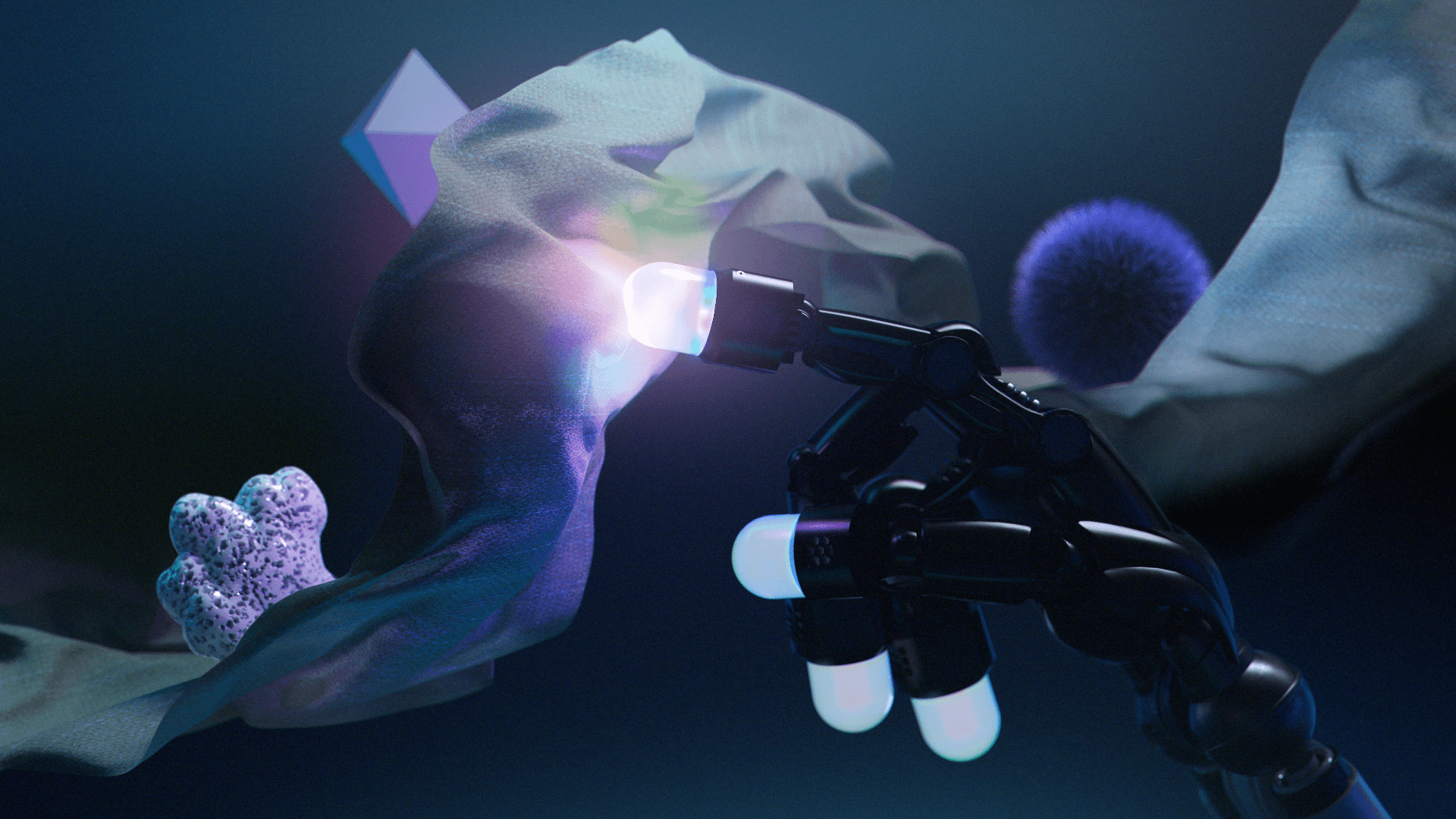
Source: Meta blog, https://ai.meta.com/blog/fair-robotics-open-source/
Meta’s FAIR Robotics team recently introduced open-source research focused on robots that learn across both simulated and real environments.
The goal is clear: build AI systems that behave intelligently in diverse physical settings.
(Reference: Meta AI FAIR Robotics Blog)
Their work highlights the importance of behavior policies—the logic that translates AI perception into meaningful actions. This marks a transition from “robots that follow scripts” to robots that make decisions.
DeepMind RT-2: Turning Web Knowledge Into Real-World Behavior
Google DeepMind’s RT-2 (Vision-Language-Action Model) demonstrates how AI can learn general knowledge from the web and apply it directly to robotic behavior.
(Reference: Du et al., RT-2: Vision-Language-Action Models, arXiv:2307.15818)
RT-2 shows that a model trained on images, text, and diverse conceptual data can perform new actions in environments it has never seen—simply by understanding what should happen next.
This is a leap toward AI that can:
generalize across tasks
understand goals
and operate autonomously in the physical world
Together, Meta and DeepMind point toward a future where AI not only informs decisions but also executes them.
Why Embodied AI Matters for Enterprises
Embodied AI is redefining what organizations can automate, optimize, and scale.
AI Can Now Perform Physical Roles
Businesses are beginning to explore AI agents that work beyond digital channels:
AI robotic hosts in retail or brand spaces
Training assistants that respond in real time
iGaming robotic dealers operating 24/7
On-site automation agents for repetitive tasks
These aren’t speculative concepts—they are emerging from advances in Embodied AI and next-generation robotics integration.
Unified Brand Experience Across Digital and Physical Worlds
AI Personas already help companies create consistent digital experiences.
Embodiment extends that persona—its tone, expressions, and behavior—into physical environments.
This allows businesses to deliver a unified brand identity across every customer touchpoint, whether online or in person.
New Types of Customer Experience Become Possible
Embodied AI opens the door to experiences that humans or traditional automation cannot replicate:
AI characters interacting with guests at events
Branded storytellers guiding customers in retail environments
Always-on service agents operating without downtime
This merging of intelligence and physical presence creates a new category of customer engagement—and a competitive differentiator.
From Digital Presence to Real-World Agency
Morphify has focused on creating highly expressive and consistent AI Personas.
The natural next step is enabling those Personas to act in the real world.
Morphify Anima RT is built around this idea.
It connects:
Persona identity
Behavior intelligence
Real-time interpretation
and Robotic execution
so that AI Personas can function as real-world agents capable of movement, interaction, and adaptive behavior.
This isn’t just about robotics—it’s about expanding what an AI Persona can represent for an enterprise’s brand, operations, and customer experience.
Embodied AI Is the Foundation for the Next Era: Text-to-Living World
Looking across research from Meta, DeepMind, and robotics innovators, one pattern is clear:
Embodied AI is the first step toward AI systems that can generate not only content, but entire experiences.
As AI learns to navigate, adapt, and operate in physical environments,
we approach a future where user instructions can produce dynamic real-world interactions—
a progression often described as Text-to-Living World.
The companies preparing for this shift today will define the next generation of intelligent, real-world experiences.
Reference
Meta AI Research. “FAIR Robotics – Open Source.” Meta AI Blog.
Du, Z., Wong, A., Choromanski, K., et al. “RT-2: Vision-Language-Action Models,” arXiv preprint arXiv:2307.15818, 2023. https://arxiv.org/abs/2307.15818